How Deep Are Concrete Footings

Alright, let's kick things off with a confession. I used to think footings were just "the bottom part of a foundation." You know, like how the bottom of a cake is important bu...

Alright, let's kick things off with a confession. I used to think footings were just "the bottom part of a foundation." You know, like how the bottom of a cake is important but nobody really talks about it. Turns out, long concrete footings are the unsung superheroes of construction, and digging too shallow can spell disaster for your entire building.
So, how deep are concrete footings actually? Well, there isn't one universal answer, and that can be a little frustrating. But stick with me, and by the end of this article, you'll feel like you know more about footings than half the people on a construction site.
Starting with the Basics
Concrete footings are essentially the base that distributes your structure's weight into the soil. Think of it like your feet after a long day of walking — the wider and more grounded they are, the steadier you feel. If they're too narrow or too shallow, you start wobbling, and nobody wants a wobbly building.
Must Read
Most residential concrete footings fall somewhere between 16 inches and 24 inches deep. That's about knee-high, if you were standing next to one. Seems tiny compared to a house, right? Yet that little trench full of concrete makes all the difference.
The "Why Does Depth Matter?" Question
Here's where it gets interesting. Frost lines are a real thing, and they are the enemy of shallow footings. If frost penetrates deep enough into the ground and your footings don't reach below it, the soil expands and compresses seasonally, and your house could crack like an old porcelain plate.
Imagine your home settling unevenly like a chair with one short leg. Doors stop closing, walls develop creepy little cracks, and you start hearing noises at night that make you question every life choice you've ever made. That's why builders obsess over frost line depth — it sounds boring, but it prevents serious headaches.
So Where Is the Frost Line Anyway?
The frost line varies wildly depending on where you live. Up north in Minnesota or Canada, frost can reach down to 6 feet or more during brutal winters. In Dixie, you might only need to dig 12 inches to get below the frosts" reach.
It's kind of like packing for vacation — what works in Miami won't cut it in Minnesota. Always check your local building codes, because they've done the homework for you already.
 How Deep Should Foundation Footings Be
Commercial vs. Residential Footings
Residential footings are generally smaller and simpler because your house isn't weighing as much as a shopping mall. Commercial buildings, on the other hand, need footings that are both deeper and wider to support heavier loads and more floors.
Some industrial footings can reach depths of 8 feet or more, which honestly sounds like a swimming pool filled with concrete. I'd hate to be the one who miscalculates that pour schedule.
Width Matters Too
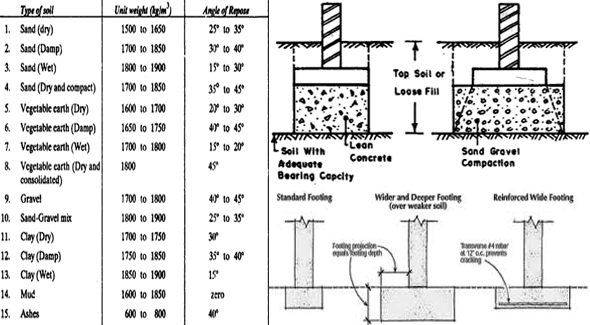
Depth isn't everything — width plays a huge role in how well footings perform. A typical residential footing might be 12 to 16 inches wide, depending on the load and soil conditions. Sandy soil? Make it wider. Clay? Make it deeper. It's a bit like tailoring clothes — you adjust based on the fit.
The general rule of thumb is that footings should be twice as wide as they are deep. So if your footing is 24 inches deep, it should span about 48 inches wide. Simple math, surprisingly satisfying result.
What Happens When Footings Are Too Shallow?
Remember that wobbly chair I mentioned? That's exactly what happens when footings don't go deep enough. The building starts settling, the foundation shifts, and repairs can cost thousands — sometimes tens of thousands — of dollars.
I knew someone who skipped proper footing depth to save a few hundred bucks upfront. The repair bill six months later? Over fifteen thousand. Talk about cutting off your nose to spite your face.
 How Deep Should Foundation Footings Be
Quick Tips for Everyday Folks
First, always hire licensed professionals rather than trying DIY footings. Playing with concrete and soil science without training is like performing surgery after watching a YouTube video. It probably won't end well for anyone involved.
Second, ask your builder directly about footing depth and width. Any reputable contractor will be happy to explain their choices, and a good person always appreciates transparency. If they dodge the question, run — and not in a casual stroll kind of way.
Third, remember that soil testing comes first. Different soil types carry different weights, and what works on rock-solid ground might sink in loose sand. A soil test costs relatively little compared to rebuilding everything from scratch.
The Bottom Line (Pun Absolutely Intended)
Concrete footings are the foundation's foundation — the part that nobody notices until something goes horribly wrong. They're not glamorous, they won't make anyone's Pinterest board, but they keep everything above them standing tall. Next time you drive past a construction site and see concrete being poured into deep trenches, give that crew a little mental nod of appreciation.
Because without properly placed, sufficiently deep footings, even the most beautiful building would be just a waiting disaster in slow motion. And honestly, life's difficult enough without worrying about your roof caving in on a Tuesday afternoon.
Take care of the basement thing first, and everything else builds on top — literally. You're welcome.
