Clean Old Coins Without Damaging Them

Ever found an old coin hiding at the bottom of a drawer or inside a dusty book? That tiny piece of history can actually tell a cool story. The tricky part is cleaning it witho...

Ever found an old coin hiding at the bottom of a drawer or inside a dusty book? That tiny piece of history can actually tell a cool story. The tricky part is cleaning it without messing it up.
A lot of people reach for harsh chemicals or go hard with scrubbing without thinking. But old coins are like little artifacts — treat them too roughly and you erase their value. So before you grab anything, let's talk about what actually works.
Why Be Careful With Old Coins?
Here's the thing: dirt and grime can actually be part of a coin's charm. Patina, that greenish-brown layer that forms over time, is what collectors often swoon over. Scrub it off carelessly and you're basically throwing away money — ironic, right?
Must Read
Beyond looks, aggressive cleaning can scratch the surface of the coin. Those tiny scratches, called hairlines, lower the coin's grade and its worth. Think of it like sanding down an antique table — one wrong move and you can't undo it.
So the goal isn't to make a coin look brand new. It's to remove loose dirt and dust while preserving everything that makes the coin special.
Gentle Methods That Actually Work
Warm Water and Mild Soap
This is your go-to first move, honestly. Fill a small bowl with lukewarm water and add a drop of gentle dish soap. The key is lukewarm — too hot and you risk changing the metal's color.
Drop the coin in and let it soak for a few minutes. Then use a soft cotton swab or your fingertips to gently wipe away any loose dirt. Rinse it under cool running water and pat dry with a soft cloth.
Distilled Water Rinse
Tap water sometimes contains minerals that leave behind marks. Consider a final rinse with distilled water instead — it's free of calcium and other deposits. It sounds fancy, but a bottle costs practically nothing at the grocery store.
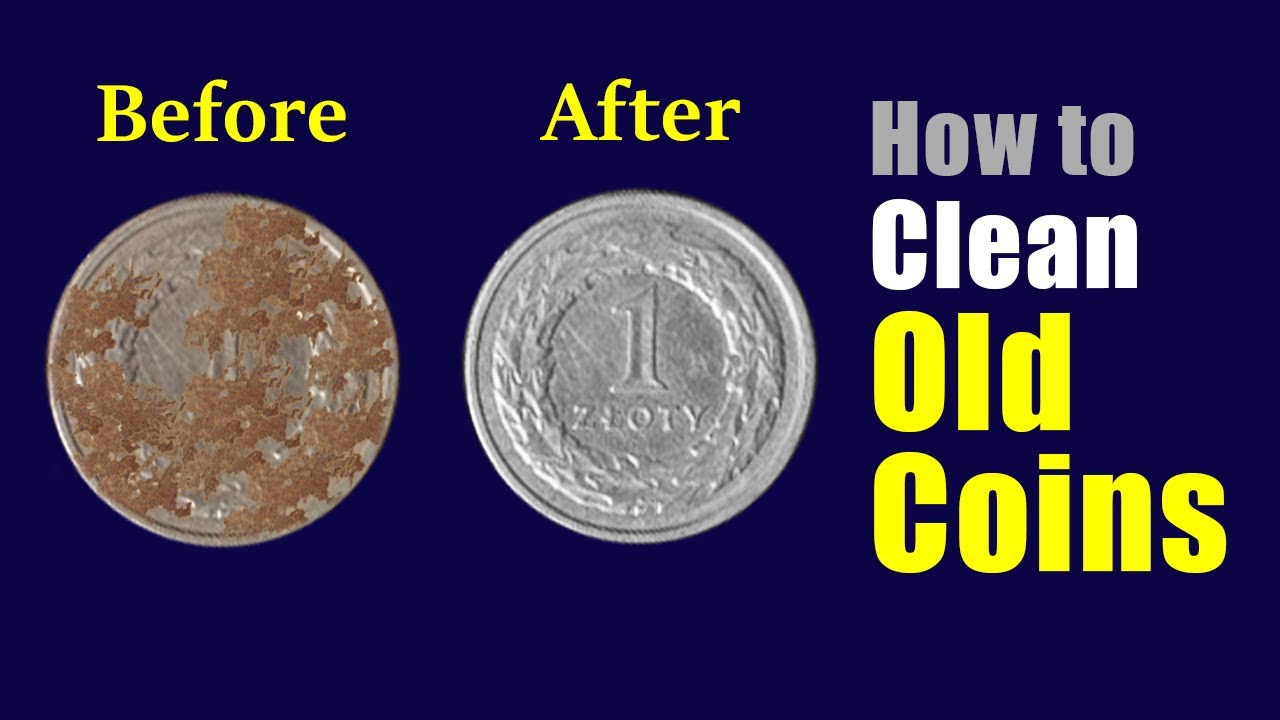 How to clean old coins without any damage - YouTube
Just a quick swish and your coin is nice and clean. No residue, no surprises. Easy peasy.
Baking Soda Paste (If Needed)
If the grime is stubborn, make a paste with baking soda and a little water. Apply it with your fingertip using gentle circular motions. No scrubbing pads, no toothbrushes — just soft, patient rubbing.
Rinse right away once you're done. Don't let the paste sit and dry on the surface, because that can leave a powdery film that's hard to remove later.
Things to Avoid at All Costs
Never use vinegar, bleach, or nail polish remover on a coin. These will eat away at the surface and permanently damage the details. It's like pouring acid on something you're trying to preserve.
Also, skip the tinfoil method you might see on social media. Soaking a coin in hot water with foil and baking soda strips away toning and alters the surface. It looks dramatic in 10 seconds, but the damage lasts forever.
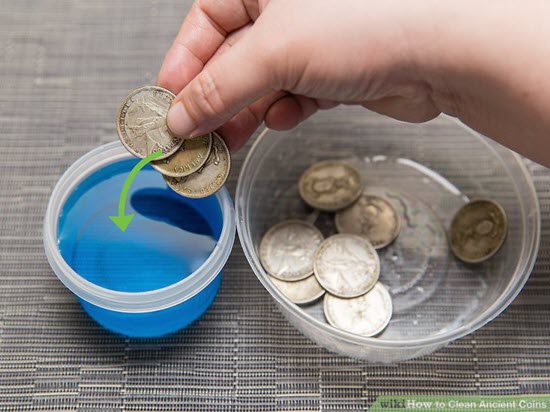 How to Clean Old Coins (Without Damaging Them) - Cleaner Digs
Avoid steel wool, sandpaper, and anything abrasive. Mechanical scrubbing is the fastest way to ruin a collectible. If it wouldn't feel gentle on your skin, don't use it on metal either.
When Should You Just Leave It Alone?
Sometimes coins are already in perfect condition with their original mint luster. In that case, touching them at all could decrease their value. If you're unsure, ask a coin dealer or do a little research first.
Valuable coins from rare years or with unique errors should go to a professional. They have specialized tools and know-how that keep the coin intact. Consider it like taking a vintage car to a mechanic rather than working on it yourself.
A Final Thought
Cleaning old coins should feel more like carefully dusting off a museum piece than scrubbing a dirty pan. Take it slow, be gentle, and always err on the side of doing less.
You might be surprised how much simple warm water can accomplish on its own. Next time you spot an old coin, you'll know exactly how to handle it — no panic, no damage. Just a little patience and respect for something that's been around even longer than you have.
