Can You Be An Apprentice With A Degree

Holding a degree used to feel like saying, "I've arrived." But in today's world, that degree sometimes feels more like a starting point than a finish line. So here's the burni...

Holding a degree used to feel like saying, "I've arrived." But in today's world, that degree sometimes feels more like a starting point than a finish line. So here's the burning question: can you trade academic prestige for an apprenticeship? The answer might surprise you.
The Old Myth and the New Reality
Traditionally, apprenticeships were the route for those who didn't go to university. Think medieval blacksmiths and guilds — one path for academics, another for trades. But that binary is rapidly shattering in the modern workforce.
Today, apprenticeships exist in rocket science, cybersecurity, data analytics, and even law. Companies like Rolls-Royce, Google, and the BBC actively recruit degree holders into structured training programs. So yes — if you already have a degree, you absolutely can become an apprentice.
Must Read
Why Would Anyone With a Degree Do It?
Here's the thing: a degree in philosophy or medieval history doesn't directly translate into job-ready skills for the tech or finance world. Apprenticeships close that gap by pairing you with real-world mentors and hands-on projects. It's basically university's practical cousin — less theory, more doing.
Some graduates also choose apprenticeships to switch careers entirely. The average UK graduate changes jobs five times in their career, so rewriting your professional story isn't uncommon. Financial reasons matter too — you get paid while you learn, unlike the traditional student loan treadmill.
Where Can You Find These Opportunities?
The UK's apprenticeship system now includes degree-level and master's-level standards at Levels 6 and 7. That means your bachelor's degree won't disqualify you — it might actually make you a stronger candidate. Sectors like engineering, healthcare, digital marketing, and finance all welcome mature or overqualified apprentices.
In the US, programs funded by the Department of Labor's Registered Apprenticeship model have expanded into tech, cybersecurity, and even creative fields. Companies like IBM and Accenture now run degree-plus-apprentice tracks for fresh graduates. It's less about replacing your degree and more about building on top of it.
Fun Fact Time
Did you know that Benjamin Franklin was essentially an apprentice? He was apprenticed to his brother's printing shop at the age of twelve. Even Albert Einstein once worked as a training assistant at a patent office — so whoever says apprenticeships don't lead to genius clearly hasn't checked the history books.
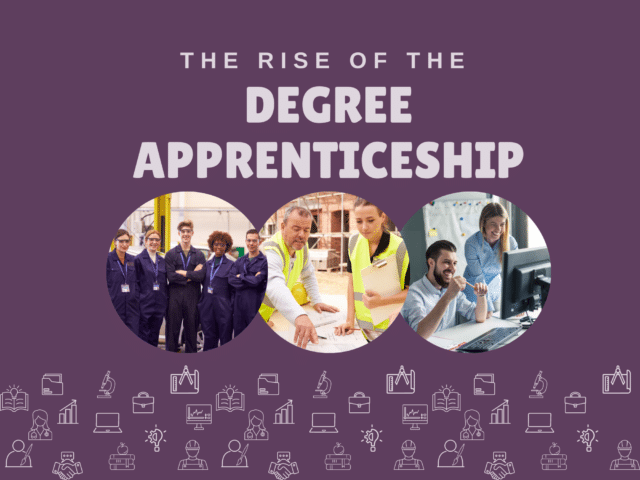 The Rise of the Degree Apprenticeship - Oakham School
What Does It Actually Feel Like?
Imagine showing up to work knowing you'll be learning — not just grinding through spreadsheets for someone else's PowerPoint. That's the apprenticeship experience: a structured blend of on-the-job training and classroom learning. Most programs run between one and four years, depending on the level.
You'll typically split your time between a workplace and a training provider or college. Expect to be challenged daily, paired with a mentor, and pushed outside your comfort zone. Some days it feels exciting; other days it feels humbling — that's normal.
Cultural Shifts in Progress
In Germany, the apprenticeship model has been the gold standard for over a century. About 50% of German high school graduates choose vocational training over university. Compare that to the UK's degree-or-bust mentality, and you start to see where the real cultural gap lies.
South Korea and Switzerland are also leaning into skilled trades apprenticeships, while Silicon Valley quietly farms talent from coding boot camps and technical programs. The message is clear: credentials matter, but competency matters more. Employers increasingly care about what you can do, not just what paper you've been awarded.
Practical Tips If You're Considering It
First, research funded programs like the UK's apprenticeship service or US apprenticeship.gov — they have searchable databases. Second, don't underestimate the power of a well-written CV that highlights transferable skills from your degree. Third, talk to your university's careers service — many now handle apprenticeship placements for graduates.
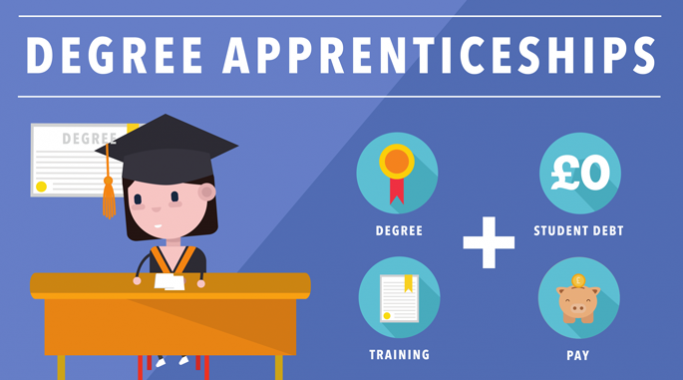 Degree apprenticeships: What You Need to Know INFOGRAPHIC
Also, be ready to eclipse your ego. You might learn from someone younger than you or sit in a classroom with people starting from zero. That's not a humiliation — that's how you grow in ways a lecture hall never taught you.
One last tip: choose a field you're genuinely curious about, not just one with a salary sticker. Apprenticeship programs reward enthusiasm, and burnout hits fast when the passion isn't there. Pick something that makes Monday feel a little lighter.
What If It Doesn't Work Out?
Not every apprenticeship fits perfectly, and that's completely okay. You can transfer between programs, pause them, or walk away with new skills on your résumé and zero student debt. Think of it as a career experiment — expensive experiments are things you can't afford.
The worst scenario is doing nothing because you're afraid your degree makes the option "beneath" you. The best scenario is discovering a passion you never expected to find behind a workshop door or a coding terminal. Either way, you're in motion — and motion beats waiting.
A Short Reflection
We live in a culture that treats degrees like trophies on a shelf — admired but eventually collecting dust. But life isn't a shelf; it's a living room where furniture keeps rearranging. Maybe tomorrow, you'll take that framed certificate down, not to reject it, but to hold hands with something new — like an apprenticeship that reminds you learning is always a beginning, never a dead end.
