What Is The Done Temperature For Chicken

Last Thanksgiving, my uncle David proudly pulled his golden-brown turkey out of the oven, sliced into it, and everyone went silent. The center was glaringly pink, and his grin...
Last Thanksgiving, my uncle David proudly pulled his golden-brown turkey out of the oven, sliced into it, and everyone went silent. The center was glaringly pink, and his grin slowly melted into a look of pure panic. That moment taught our whole family one thing — temperature matters, people.
I wish I could say we all went home hungry that night. But somehow, nobody got sick, and Uncle David still acts like he knows everything about cooking. And honestly, that audacity is kind of impressive.
So why am I talking about my uncle's cooking disaster? Because the same principle applies to chicken — except with salmonella in the picture, we don't really have room for that kind of gamble.
Must Read
The Magic Number: 165 Degrees Fahrenheit
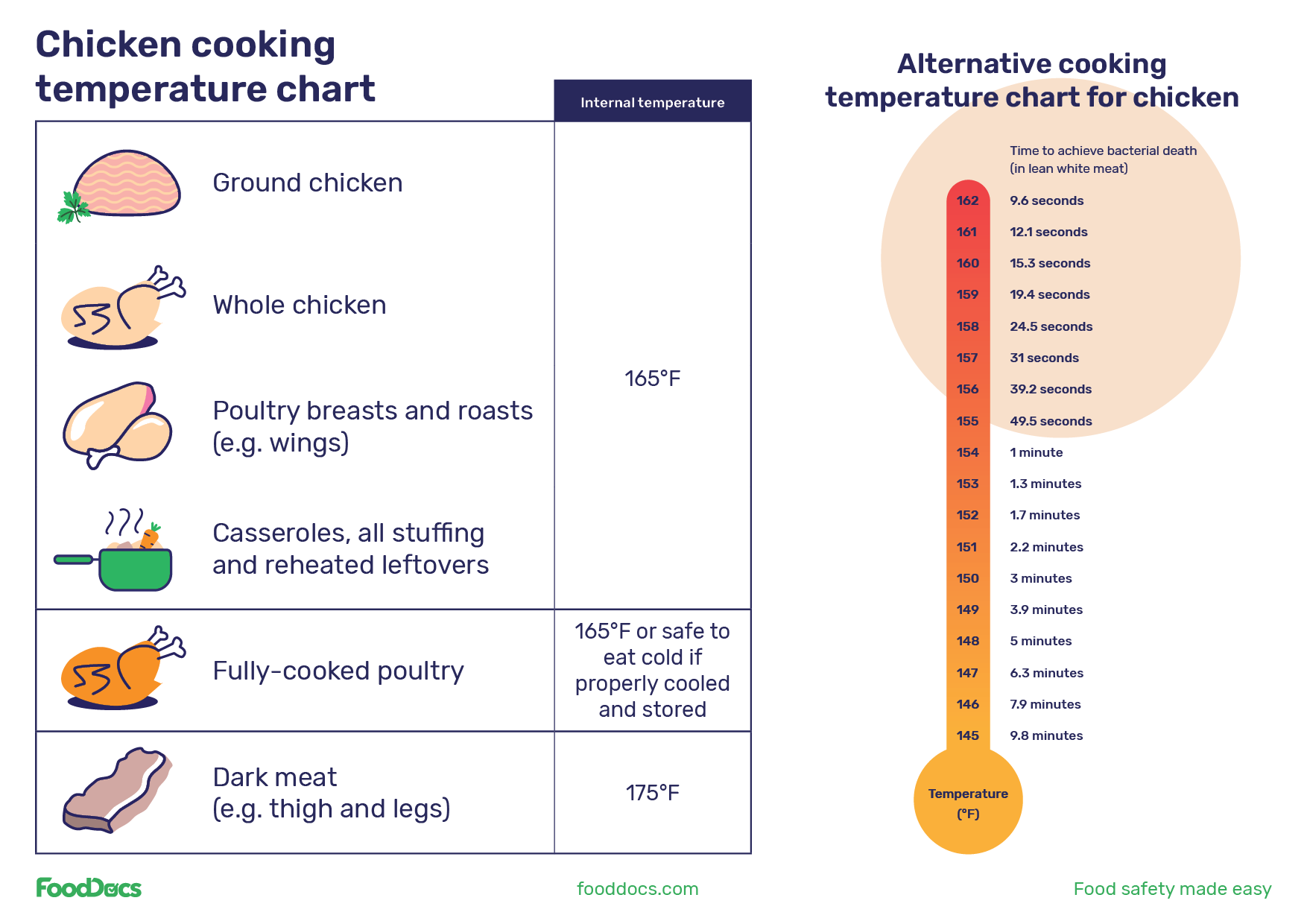
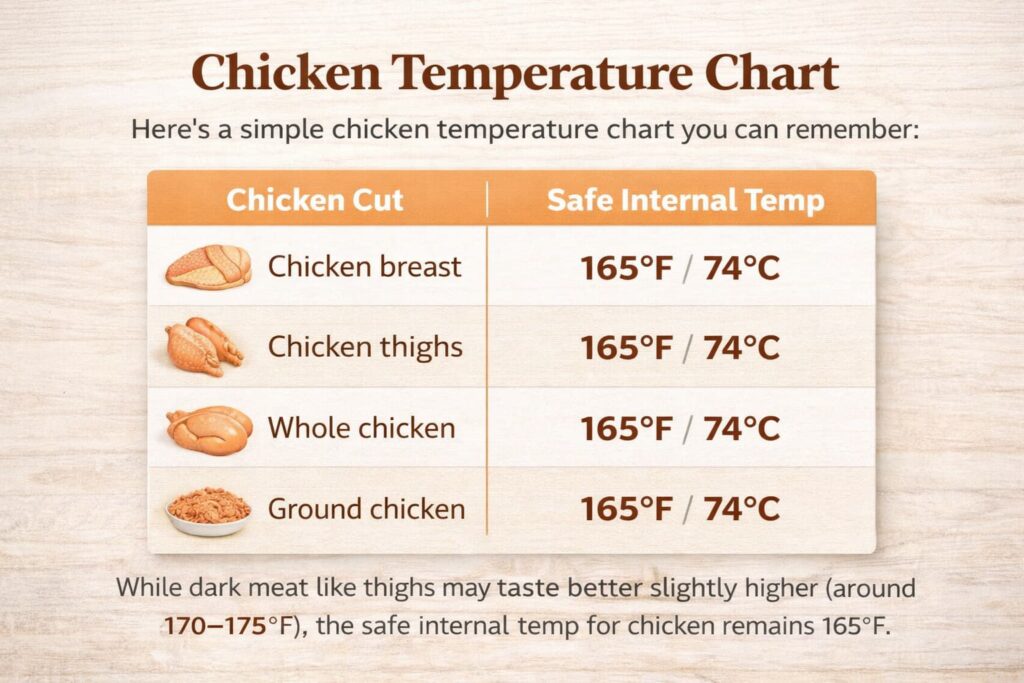
Here's the bottom line: chicken is fully cooked at 165°F (74°C). That's the temperature confirmed by the USDA and just about every food safety expert out there. When you hit that number, harmful bacteria like salmonella and campylobacter are, for all intents and purposes, gone for good.
Now, I can practically hear some of you groaning. "165 degrees? That's so high — my chicken will be dry!" Look, I get it. We've all suffered through rubbery chicken breasts that taste like cardboard with a little salt.
But here's the thing: 165°F is the temperature at which those bacteria die instantly. It doesn't actually mean you have to pull your chicken out exactly at that reading for it to be safe. Stay with me on that — it gets interesting below.
Wait, Can I Go Below 165°F?
Surprisingly, yes — if you're patient enough. The USDA's own guidelines show that chicken held at 150°F for just 3.8 minutes will have killed the same dangerous bacteria as a snap at 165°F. Temperature and time work like a team, not a solo act.
 Chicken Internal Temp Chart: Safe Cooking Temperatures Guide
So if you pull off a gorgeous roast chicken resting at 150°F and let it sit for a few minutes, it's technically safe. That's the kind of kitchen magic that makes people say, "How did you do that?" over dinner. And yes, take all that credit.
But if you're not sure about the timing or you just don't want to risk it, stick with the 165°F rule. It's simple, it's foolproof, and it saves you from writing an apology letter to your gut.
Where Should You Check the Temperature?
This part is crucial and also surprisingly common to get wrong. You want to insert your meat thermometer into the thickest part of the chicken — preferably the breast or thigh, avoiding bone. Why? Because bone conducts heat differently and can give you a misleadingly high reading.
I once watched a friend check a tiny piece of shredded chicken with an instant-read thermometer and proudly announce it was done. But he was measuring the part that touched the pan — not the middle. Chef's move is to measure the core, not the surface, always.
Also, spot-check multiple pieces if you're cooking a whole bird or a large batch. Every piece might not cook at exactly the same rate, and one risky bite isn't worth it for a Tuesday night dinner.
 Chicken Internal Temp: The Secret to Safe, Perfect Chicken - Foodiosity
A Quick Cheat Sheet for Common Cuts
Breast meat should hit 165°F and often gets there a bit faster than thighs. Thighs and drumsticks are more forgiving because they're fattier and juicier — they taste great even at a slightly higher temperature. And if you're cooking ground chicken, make absolutely sure the whole batch reads 165°F throughout, not just one spot.
Rotisserie chicken from a store? Usually safe because the store follows regulations — but it never hurts to double-check at home. Kitchen safety is a habit, not a panic in the moment.
The Real Takeaway
Knowing the done temperature for chicken isn't about being obsessive or turning every meal into a science project. It's about protecting the people you cook for — including yourself — from something entirely preventable. Foodborne illness is no fun, and neither is spending your weekend sick on the couch.
So invest in a good digital meat thermometer, keep that 165°F target in your head, and cook with confidence instead of guessing. Because guessing is what Uncle David does, and we've all seen how that ends.
Happy cooking — and may your chicken always be safe, juicy, and just a little bit smug about it. 😄
