Can I Be An Apprentice If I Have A Degree

Picture this: you've been through years of university, you've got the fancy certificate framed on your wall, and yet you're curious about learning a trade the old-school way....
Picture this: you've been through years of university, you've got the fancy certificate framed on your wall, and yet you're curious about learning a trade the old-school way. You look at an apprenticeship program and think, "Wait... am I even allowed?" The answer might surprise you.
Here's the thing — having a degree does not disqualify you from becoming an apprentice. In fact, many people with university backgrounds actively choose apprenticeships to shift careers or gain hands-on skills they never got in the classroom. It's not a step backward; it's a different kind of growth.
What Even Is an Apprenticeship?
An apprenticeship is essentially a paid job where you learn a craft by doing it, combined with some classroom training. Think of it as learning to cook by standing next to someone who's been doing it for years rather than just reading a recipe book. You get real experience, a real paycheck, and a real qualification at the end.
Must Read
Apprenticeships exist across all sorts of industries — from electrical work and plumbing to engineering, healthcare, and even digital marketing. They're built for people who learn better with their hands than with a stack of textbooks. Honestly, some of the most successful people started this way.
So, Why Would Someone With a Degree Do This?
Maybe you studied history but now you dream of being a carpenter. Maybe your business degree led to a desk job that drains your soul, and you secretly wish you were building things with your hands. Starting an apprenticeship gives you a structured path to make that change.
There's also the simple love of craftsmanship. Some people sit through four years of lectures and realize they're happiest when they're fixing a car, locking up a commercial property, or wiring a building. An apprenticeship lets them do exactly that without feeling like they wasted their education.
And sometimes it's about money. A degree doesn't always guarantee a high salary, but skilled tradespeople often earn very well — especially once they're fully qualified. Shifting into a trade isn't taking a pay cut in the long run; it could be the smartest financial move you make.
 Working With Students: Placements, Internships, Apprenticeships - GM
What Do Employers Care About?
Here's a little secret — most employers don't care about your degree when they're looking for an apprentice. They care about your willingness to learn, your attitude, and whether you show up on time without complaining about the weather. Turn on any home-improvement show and you'll see people of all backgrounds doing this successfully.
A friend of mine named Jake had a marketing degree and worked in an office for three years. By his thirtieth birthday, he was burnt out and enrolled in a plumbing apprenticeship. Within eighteen months, he was happier than he'd ever been — degree hanging untouched in his parents' house.
Do You Give Up What You Already Know?
Absolutely not. Your degree is not erased from existence just because you pick up a toolkit. Many apprentices bring transferable skills like communication, problem-solving, and time management that make them stand out from other candidates.
Some apprentices even use their degree to jump ahead. If you've already got a background in engineering, for example, an apprenticeship in renewable energy might move you along faster than you think. Your education becomes an advantage, not a burden.
Plus, you never lose the ability to go back to your original field. Life is long, and having multiple skill sets in your toolbox only makes you more adaptable when the world changes around you.
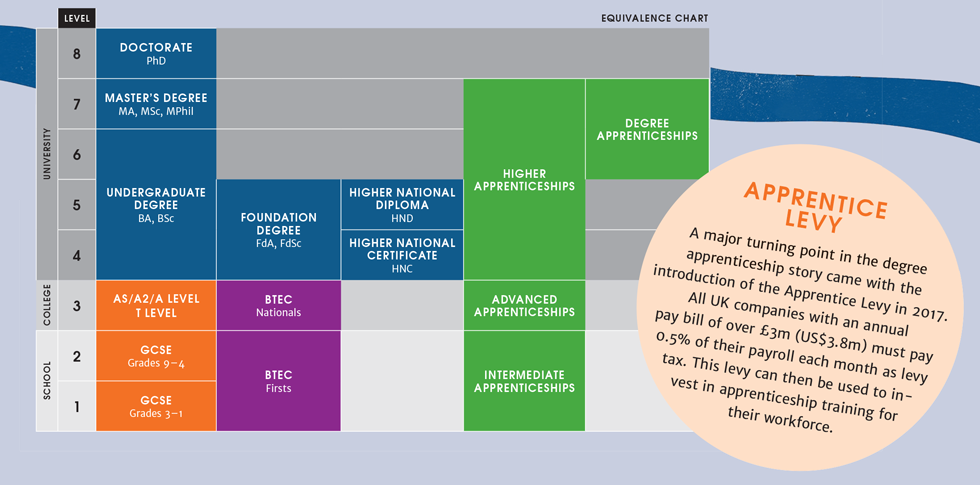
 Apprenticeships Levels Explained. – UQUKSY
Is It Right for You?
Ask yourself a simple question: would you rather be stuck doing something you hate every morning or spending a few years learning something you genuinely enjoy? If your heart sinks every time Sunday night rolls around, that's worth paying attention to.
Apprenticeships are ideal for people who value practical experience over pure theory. They're also perfect for anyone who learns by touching, building, fixing, or creating rather than memorising. There's no shame in needing that kind of environment to thrive.
And remember — you're never too old or too educated to start something new. The idea that you've picked one path and must stick with it forever is a story we tell ourselves, not a rule the universe Enforces.
The Bottom Line
You absolutely can be an apprentice if you have a degree. The only real question is whether you're ready to roll up your sleeves and learn something exciting in a completely new way. Your degree opened one door; apprenticeship can open another just as wide.
Life's too short to stay in a job that makes you unhappy just because society says your education "obligates" you to it. If sparks and sawdust excite you more than spreadsheets and email chains, go for it. Start the conversation with a local apprenticeship provider and see where it takes you.
